
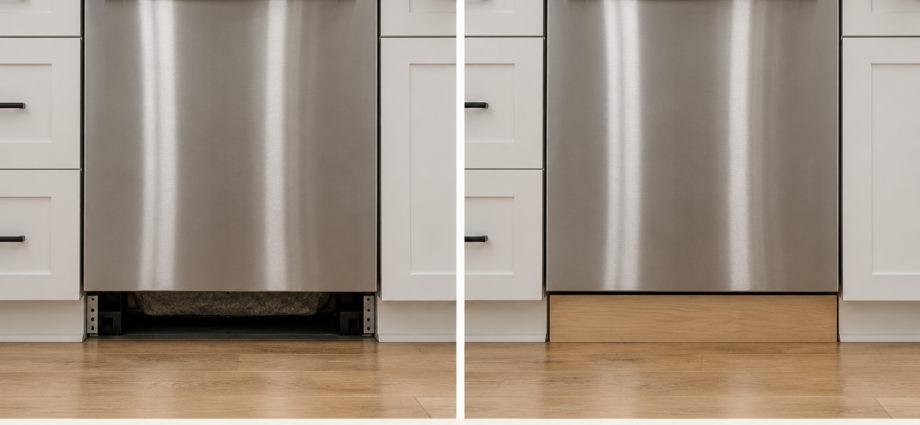
When ferret-proofing your kitchen, get down to floor level and inspect the space beneath the dishwasher. Depending on the model and installation, there may be an opening that gives your ferret access to insulation or the space underneath the appliance.
In our home, we discovered that our ferrets could reach the insulation beneath the dishwasher and tear through it. What looked like a small gap became a potential entrance into an area where we could not easily reach them.
We blocked the opening with a fitted piece of wood. A properly finished metal barrier may be another option, depending on the installation.
The important detail is the fit: the barrier must allow the dishwasher door to open and close fully without rubbing, catching, or damaging anything. It also must not obstruct required ventilation or access for servicing. Check the appliance’s installation instructions, and ask an installer for help if you are unsure where a barrier can safely go.
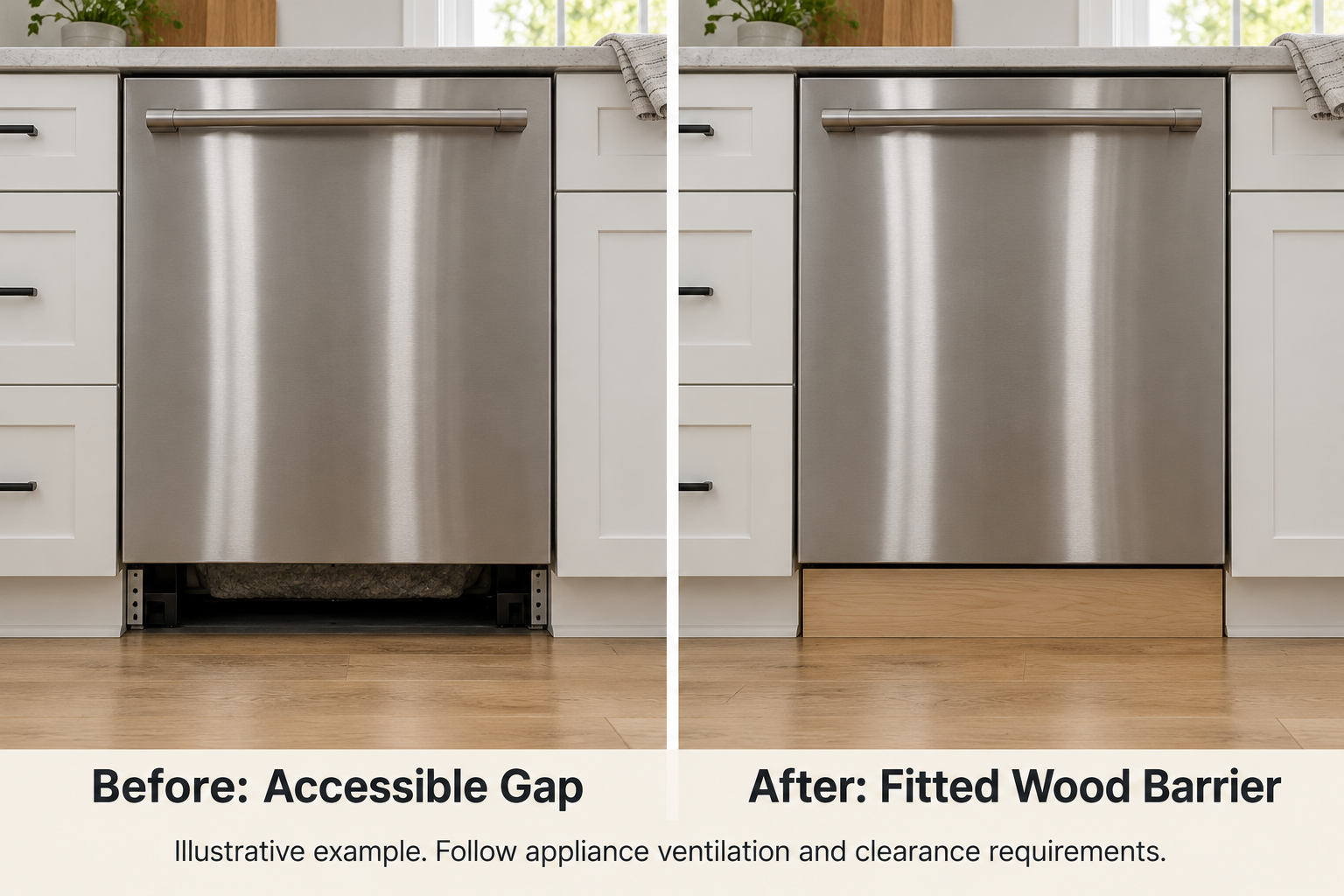
What to Check
- Look for openings beneath the door and around the lower access panel.
- Check whether insulation is exposed or within reach.
- Make sure any barrier is secure, with no sharp edges or accessible fasteners.
- Test the dishwasher door through its full opening and closing movement.
- Recheck the area after repairs or appliance replacement.
Our lesson: Don’t assume an installed dishwasher is inaccessible to a ferret. Inspect the actual gaps in your kitchen—even an opening you barely notice may attract a determined explorer.